Fountain Valley soil shifts with the seasons. We pour reinforced concrete slab foundations designed for local conditions, with permits handled and inspections scheduled.
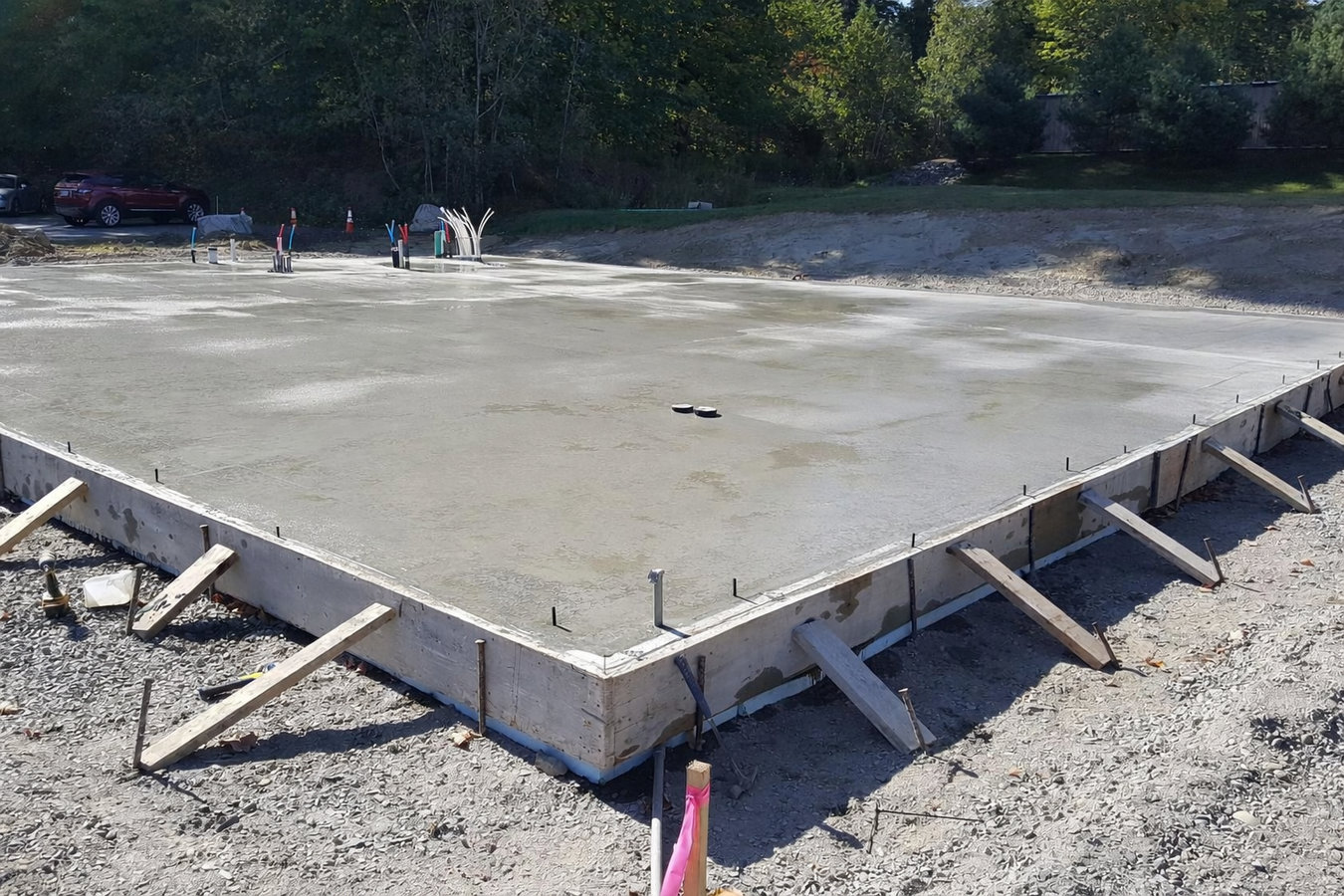
Slab foundation building in Fountain Valley covers soil compaction, gravel base, moisture barrier, steel reinforcement, and concrete pour - most residential slabs are poured in a single day once the permit is approved and the site is prepared, with the full process taking four to six weeks from first contact to a slab ready for framing, with costs typically ranging from $8 to $15 per square foot for the complete job.
Fountain Valley sits on soils deposited by the Santa Ana River, and the clay content in parts of the city moves with seasonal moisture - swelling in wet winters, shrinking in dry summers. That movement is the main reason slabs built without proper base preparation develop cracks and uneven floors. Most slab projects here are tied to additions, ADU builds, or garage construction, and homeowners adding a full foundation installation for a new home or rebuild will follow a similar process with additional structural design requirements.
We serve Fountain Valley homeowners from first estimate through final inspection, handling the city permit and scheduling every required inspection. Call us if you are not sure whether your project needs a new slab or something else - we will give you a straight answer.
If you are building an addition, a detached garage, or a backyard ADU on your Fountain Valley property, a new slab is almost certainly required. The project cannot move forward without a foundation in place first. Your architect or general contractor will confirm this early in the planning process.
If furniture rocks on a flat floor, a ball rolls on its own, or a door has started dragging when it used to swing freely, the slab beneath may have shifted or settled. In Fountain Valley, clay-heavy soils in some neighborhoods cause this kind of movement over time - especially after wet winters followed by dry summers. This warrants a professional assessment.
Small hairline cracks in a concrete floor are common and usually harmless. Cracks wider than about a quarter-inch - or where one side sits higher than the other - signal more significant movement. Given Fountain Valley's soil conditions and seismically active location, cracks like this deserve a professional evaluation sooner rather than later.
If your floor feels damp, you notice a musty smell near the ground, or flooring materials are buckling or discoloring from below, moisture may be wicking up through the slab. This is a known issue in parts of Fountain Valley where the water table sits relatively close to the surface. A new slab with a properly installed moisture barrier solves this permanently.
We pour residential slab foundations for additions, detached garages, ADUs, and garage conversions across Fountain Valley and surrounding Orange County cities. Every slab includes soil compaction, a compacted gravel base, a plastic moisture barrier, and steel reinforcement placed to meet California seismic requirements. For homeowners completing a full foundation installation for a new structure or replacement project, we work with the same detailed process at larger scale - including engineering review and coordination with the structural framing team.
Permits are handled on every job. We submit the application to Fountain Valley's Building and Safety Division, track it through approval, and schedule the required pre-pour city inspection. Surface finish options include broom finish for practical applications and smooth trowel finish for spaces that will receive tile or flooring. We also pour concrete footings when the project calls for isolated post or column supports rather than a full slab.
Best for homeowners adding a room, a detached garage, or any structure that needs a flat, load-bearing concrete base.
Sized and reinforced for the specific load of an accessory dwelling unit - includes permit handling for Fountain Valley ADU projects.
For homeowners whose existing garage floor is cracked, uneven, or moisture-damaged past the point of repair.
Poured to tie into your existing structure, with thickened edges and steel designed for the load of the new framing above.
Fountain Valley was built out almost entirely in the 1960s and 1970s on flat, low-lying land that was once part of the Santa Ana River floodplain. The soils here are alluvial - layers of sand, silt, and clay - and the clay content causes real movement with seasonal moisture changes. Add in a water table that sits relatively close to the surface in parts of the city, and you have a site condition that punishes contractors who skip the moisture barrier or rush the base compaction. A slab built right in Fountain Valley accounts for all of this before the concrete truck arrives. The American Concrete Institute publishes the standards that govern how reinforcement is placed and how concrete is cured - the benchmarks we work to on every pour.
We work across our full service area, from Huntington Beach - where coastal moisture adds another layer of consideration for slabs near the shoreline - to Irvine, where new development and infill ADU projects drive steady demand for properly engineered slabs. In every city, the permit process and inspection requirements are the baseline - not an optional extra.
We reply within one business day and schedule a site visit before giving you a firm price. Soil conditions and property access both affect cost - a quote without a site visit is just a guess. Expect the estimate visit to take 30 to 60 minutes.
We submit your permit application to Fountain Valley's Building and Safety Division and track it through approval. This typically takes one to three weeks. You should not have to chase this down - it is part of the job.
Once the permit is approved, the crew excavates, grades, and compacts the soil. A layer of gravel is spread and compacted, then the plastic moisture barrier is laid on top. This phase takes one to three days and is the most important part of the job.
Steel reinforcing bars are placed in a grid, and a city inspector verifies everything before any concrete is poured - this inspection cannot be skipped. After the pour, the slab is ready to walk on within 24 to 48 hours and ready for framing within about a week.
We visit the site, assess soil conditions, and give you a written quote that breaks out every cost. No surprises. Reply within one business day.
(714) 386-7308The alluvial soils in parts of Fountain Valley - deposited by the Santa Ana River over centuries - expand when wet and contract when dry. We account for that with deeper excavation, thorough compaction, and a properly graded gravel base before a single yard of concrete is placed. Slabs built without that prep shift and crack; ours do not.
We handle the permit application through the City of Fountain Valley Building and Safety Division and coordinate the required pre-pour inspection. You receive a copy of the closed permit when the job is done - which protects your home's record at resale and with your insurance carrier.
Fountain Valley sits in a seismically active region, and local building requirements specify how much steel goes into the slab and how it is placed. City inspectors check this before the pour. We build to those requirements every time - not to a lower standard to save material costs.
ADU demand has grown across our 12-city service area from Fountain Valley to Huntington Beach and Irvine. We know the permit process, understand how to tie a new slab into an existing structure, and design slabs for the specific loads that ADU framing places on a foundation.
Verify contractor credentials before any work begins - the California Contractors State License Board lets you check any license number online in seconds. Every job we do is permitted, inspected, and documented - so your home's record stays clean. Seeing how a reputable concrete slab contractor in another market approaches this work is a useful benchmark when comparing bids.
Full foundation installation for new homes and structures, with seismic reinforcement and moisture protection built to current California code.
Learn morePoured concrete footings that anchor posts, columns, and walls to stable ground below the frost line and surface movement zone.
Learn morePermit season fills up fast in Orange County - call now to schedule your site visit and lock in your start date before the next inspection window closes.