Everything you build rests on the footing below it. We pour concrete footings in Fountain Valley built to local seismic standards, sized for clay soil conditions, and permitted through the city so your structure stays standing for decades.
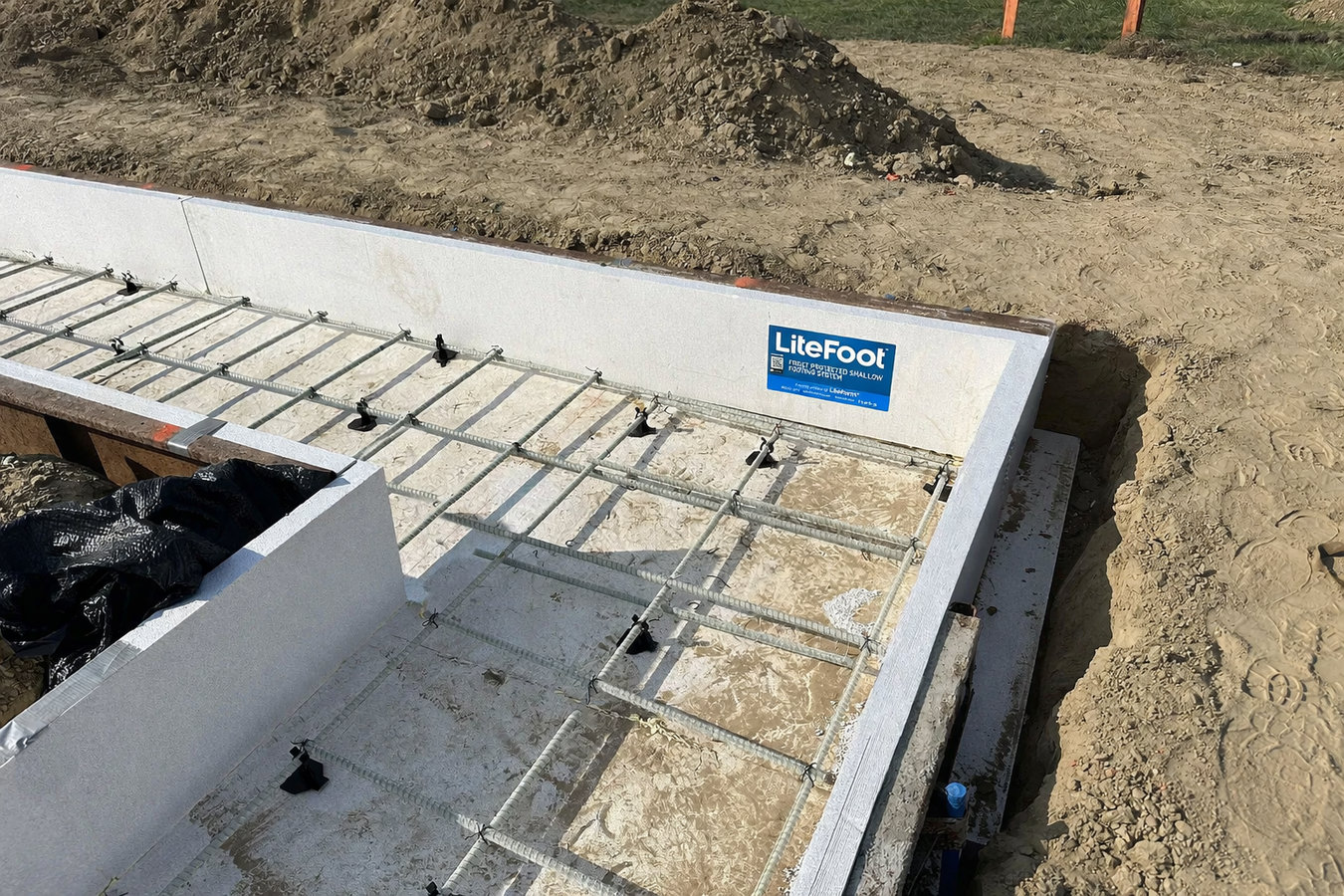
Concrete footings in Fountain Valley cover excavation to stable soil, rebar placement, a city pre-pour inspection, and the concrete pour - most residential footings are completed in a single day of active work, with total project time including permitting running one to six weeks depending on project complexity, and costs ranging from a few hundred dollars for a simple fence footing to several thousand for a full perimeter addition footing.
Fountain Valley sits in a seismically active part of Southern California, and local building code requires steel reinforcement in footings to handle ground movement. The city also sits on clay-heavy coastal soils that expand and contract with seasonal moisture - conditions that require footings sized and deepened to match. Homeowners adding a full foundation for a new structure often combine this work with our foundation installation service when the scope grows beyond individual footings.
We pull permits, coordinate city inspections, and give you a written estimate before any digging starts. Call us and we will assess your project within one business day.
If you are thinking about building a deck, adding a room, putting up a new fence along a property line, or constructing a detached garage, you almost certainly need new footings before any of that work begins. In Fountain Valley, any permitted structure requires a footing that meets city standards - your contractor will confirm the specifics, but the need for footings is essentially guaranteed when you are adding something new.
Small hairline cracks in concrete or stucco are common and often cosmetic. But if you are seeing cracks that are widening over time, running diagonally from the corners of windows or doors, or causing doors and windows to stick, that can be a sign that the footing beneath the structure has shifted. In Fountain Valley, the clay-heavy soils in some neighborhoods can cause this kind of movement, especially after a dry summer followed by winter rains.
If a fence post has started to lean noticeably or a deck support post looks like it is sinking into the ground, the footing beneath it has likely failed or was never adequate to begin with. This is a safety issue, not just a cosmetic one - a leaning fence can fall, and a sinking deck can become unstable. Replacing the footing is the right fix, not just propping the post back up.
Many homes in Fountain Valley were built in the 1960s and 1970s, when footing requirements were less stringent than they are today - particularly around earthquake resistance. If you are planning to add onto one of these homes, the existing footings may not meet current standards and may need to be supplemented or replaced as part of the project. A contractor familiar with Fountain Valley's housing stock will flag this early so it does not become a surprise mid-project.
We pour footings for decks, additions, ADUs, retaining walls, fences, and detached structures across Fountain Valley. Every footing starts with a site visit - we assess the soil, confirm the required depth, and size the steel reinforcement correctly for what you are building and the ground it will sit on. For properties with clay-heavy soil, we design footings with the seasonal expansion and contraction cycle in mind so you do not end up with a tilting fence or a cracked deck post five years from now.
Clients who are raising or leveling an existing structure sometimes need our foundation raising service before new footings are poured - we assess the situation and give you a clear picture of what the full scope requires before any work begins.
Post footings sized and reinforced for attached and detached decks - dug to stable soil and designed to handle Fountain Valley's seasonal clay movement.
Continuous perimeter footings for room additions and accessory dwelling units, poured to current California seismic and moisture standards.
Concrete footings for block walls, wood fences, and masonry structures - sized to the height and load of the finished wall.
For older Fountain Valley homes where original 1960s-1970s footings no longer meet current seismic or structural requirements.
Fountain Valley was built primarily in the 1960s and 1970s, and many of those original footings were designed to standards that predate current seismic and moisture requirements. The area also sits on clay-heavy coastal plain soil that moves with seasonal moisture - a factor that matters for how deep and wide a footing needs to be. Add the city's high-water-table zones near the coast and you have conditions that reward a contractor who has worked here specifically, not one who has only done footings in drier, inland soil. The California Geological Survey publishes soil hazard data for Orange County that guides how structural footings should be designed in this part of the state.
We regularly serve homeowners in neighboring cities that face similar conditions. Clients in Westminster often deal with the same clay soil and post-1960s housing stock, and homeowners in Garden Grove face comparable seismic and permit requirements through the City of Garden Grove's building division. Local knowledge is not just about knowing the city - it is about knowing the ground.
We will ask what you are building, roughly where on your property, and whether you have already spoken with the city about permits. Most footing projects require a site visit before we give you a firm price - conditions on your property affect the cost more than almost anything else. We reply within one business day.
During the site visit we check access for equipment, assess the soil, and confirm what the city requires in terms of footing size and reinforcement for your specific project. We then pull the building permit from the City of Fountain Valley's Building Safety Division - plan for a few days to a few weeks for approval.
Once the permit is approved, the crew digs the trenches to the required depth. We call 811 - the utility-locating service - before any digging begins to make sure no underground lines are in the path of the trenches. This is standard practice and protects everyone on the project.
A city inspector checks the trench depth, width, and steel reinforcement before the concrete goes in. Once signed off, the pour happens - usually the same day. Plan on at least a few days before the next phase of your project can start. We clean up the site and hand you a copy of the permit closeout paperwork.
Free on-site visit. Written estimate before any digging starts. No pressure, no obligation.
(714) 386-7308Fountain Valley sits in a seismically active part of Southern California, and California building code specifies how footings must be reinforced to handle ground movement. City inspectors check this before the concrete is poured. We build to those requirements on every project - not a lower standard to reduce material costs. The Portland Cement Association provides guidance on proper rebar placement and mix specifications for structural footings. Portland Cement Association.
Parts of Fountain Valley and the surrounding Orange County coastal plain sit on clay soils that expand when wet and shrink when dry. We size footings wider and deeper than the bare minimum when local soil conditions call for it. We have completed footing projects across all 12 cities in our service area - from Fountain Valley to Long Beach and Torrance - and we understand what local soil conditions require.
We submit the permit application to the City of Fountain Valley Building Safety Division, coordinate the required pre-pour inspection, and hand you the signed permit paperwork when the job is done. Unpermitted footing work is one of the most common issues that surfaces during a home sale in Orange County - every project we complete has an inspection record on file with the city.
Fountain Valley's flat, low-lying terrain means the water table can be close to the surface in some neighborhoods - closer than you find inland. After heavy rain, excavated trenches can fill with water before the pour. We plan around this on every project: timing the pour correctly and pumping standing water out of trenches before concrete goes in, because pouring into water weakens the finished footing significantly.
Every footing we pour starts with an honest site visit and ends with a closed city permit on file. If you are not sure what your project needs - or whether your existing footings are adequate for what you want to build - call us and we will give you a straight answer at no charge.
The City of Fountain Valley Building Safety Division publishes permit requirements for footing and foundation projects. The California Geological Survey provides soil and seismic hazard data for Orange County. Call us with any questions that are not covered above - we are happy to help.
Foundation raising for settled or damaged structures - assessed and leveled to restore clearance and structural integrity before new footings are set.
Learn moreFull perimeter foundation installation for new structures and additions, with the same seismic reinforcement and inspection process as our footing work.
Learn morePermit timelines fill up fast - call today and we will schedule your site visit within one business day.